
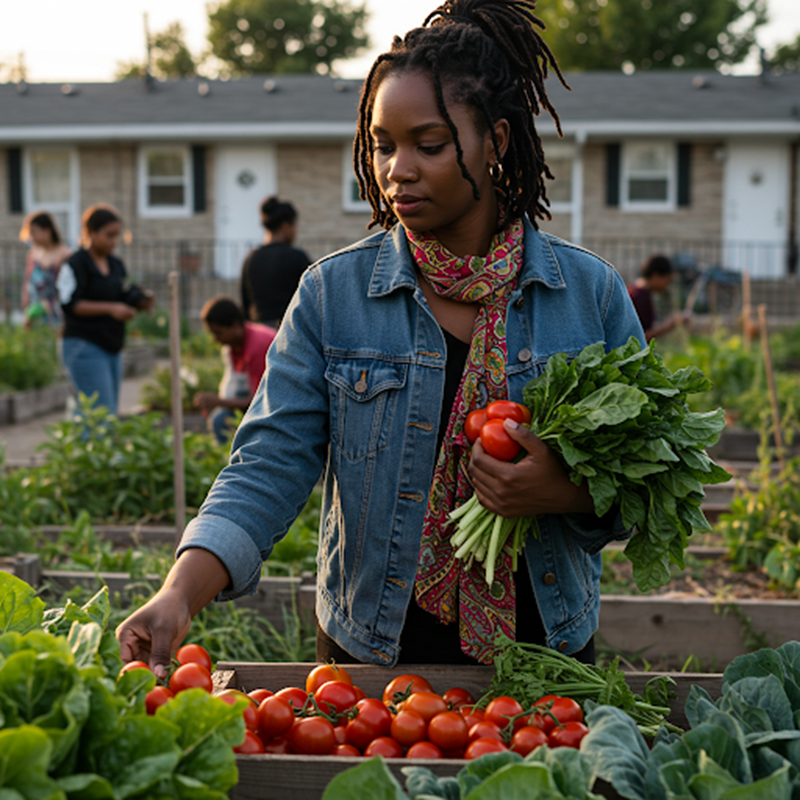
Hey sis, let me talk to you. We talk a lot about protecting our peace and nurturing our mental health, but did you know the food on your plate plays a huge role in that? Seriously! What we eat is literally the fuel for our brain, impacting everything from our mood and energy levels to how well we cope with stress. Think of it like this: our brains need the right nutrients to build those important chemical messengers (like serotonin, that feel-good vibe) and to keep inflammation down, which researchers are linking more and more to things like depression and anxiety.
Now, here’s where it gets complicated for us. Accessing those brain-boosting, nutritious foods isn’t always straightforward in our communities. You’ve probably heard the terms food insecurity and food deserts, and unfortunately, Black people are more likely to experience these challenges than our white counterparts. Let’s break down what those terms mean.
Food insecurity is defined as having “limited or uncertain capacity for acquiring sufficient, safe, and nutritious food at all times to meet one’s dietary needs,” while food deserts often refer to “economically and socially deprived inner city areas with inadequate food supply that low-income groups often inhabit” (National Institutes of Health [NIH], n.d., citing Nwankwo et al., 2017). It means struggling to consistently get enough healthy food, often because nutritious options just aren’t available or affordable nearby.
So, how does this directly hit our mental health as Black women? Research shows a clear link. Living with food insecurity or in a food desert has been shown to negatively affect emotional eating habits, the ways we cope emotionally, overall coping strategies, and can increase depressive symptoms among low-income African-American women (Nwankwo et al., 2017). It doesn’t stop there; lack of access to healthy foods has even been linked to decreased physical activity (Nwankwo et al., 2017), and we know movement is another key piece of the mental wellness puzzle.
It forces us to ask the question: Why us? Why do these food challenges hit Black women so hard? It’s not accidental. There are deep-seated, systemic reasons at play:
- The Legacy of Segregation: Discriminatory housing practices generations ago (like redlining) pushed Black families into specific neighborhoods, and investment didn’t always follow.
- Economic Disinvestment & “White Flight”: Many businesses, including large supermarkets, left predominantly Black neighborhoods, often deliberately neglecting these areas.
- Lack of Current Investment: Even today, supermarket chains might hesitate to build in lower-income areas, citing potentially higher costs or lower profits, leaving communities underserved.
- Transportation Hurdles: Without a reliable car or accessible public transport, simply getting to a store with fresh produce and affordable staples can be a major obstacle.
Knowing these barriers exist can feel heavy, I know. But knowledge is power, and so is reclaiming control where we can. While we absolutely need broader community action and systemic changes (and maybe we can talk more about that in another post!), let’s focus today on some things you can do right now to navigate this and prioritize your nutritional well-being, even when resources feel limited.
Here are a few strategies to consider:
- Become Your Own Nutrition Expert: Empower yourself with knowledge! Learn how to read food labels to spot hidden sugars or sodium. Find simple, healthy recipes using affordable staples. Understanding how to maximize the nutrition you can access makes a difference.
- Plan Your Shopping Power Moves: If possible, plan occasional trips to stores outside your immediate area that might have better selection or prices. Stock up on healthy, shelf-stable items like beans, lentils, oats, canned fish (in water!), and frozen fruits and vegetables (just as nutritious as fresh!). Know your SNAP/WIC benefits inside out and use them strategically.
- Grow Your Own Goodness: Don’t underestimate the power of a small garden! Even a few pots on a windowsill or balcony can grow herbs, lettuce, or tomatoes. It’s a fantastic way to get super-fresh ingredients and connect with your food.
- Tap Into Community Resources: Find out about local food pantries, meal programs, or community fridges. Don’t hesitate to use these resources when needed – that’s what they are there for! You can also gently advocate for healthier options within these programs. Check if local health clinics offer nutrition counseling.
- Prioritize Your Mental Health Support: Dealing with food insecurity is stressful. Period. Seeking support from a therapist or counselor can be invaluable. Look into community mental health services, online therapy platforms with sliding scales, or support groups. You don’t have to carry this weight alone.
- Manage That Stress, Sis: Because this struggle is stressful, intentional stress management is key. Build in practices that soothe your spirit – maybe it’s mindfulness or meditation, gentle movement like walking, journaling, or making time for a creative hobby.
Remember, taking care of yourself isn’t selfish – it’s survival, especially for us. Understanding how vital nutrition is for our mental health, while also acknowledging the real-world barriers Black women face in accessing it, allows us to be both realistic and proactive.
Start where you are. Maybe today it’s just reading a food label more closely, planning one healthy meal, or researching a local community garden. Every mindful step you take towards nourishing your body and mind is a powerful act of self-care and resilience. You got this.
References
National Institutes of Health. (n.d.). The World Health Organization – Community Empowerment Model in Addressing Food Insecurity in Low-Income African-American Women: A Review of the Literature. PubMed. Retrieved May 5, 2025, from https://pubmed.ncbi.nlm.nih.gov/29932567/
 Her Melanated Mind
Leave a comment